
Marble Grinding & Polishing in Qatar
Diamond grinding, polishing and sealing that bring back the shine and smoothness of marble floors, stairs and surfaces in villas across Qatar.
- From 30 QAR per m²
- Quality guarantee
Available 24/7, with a free consultation
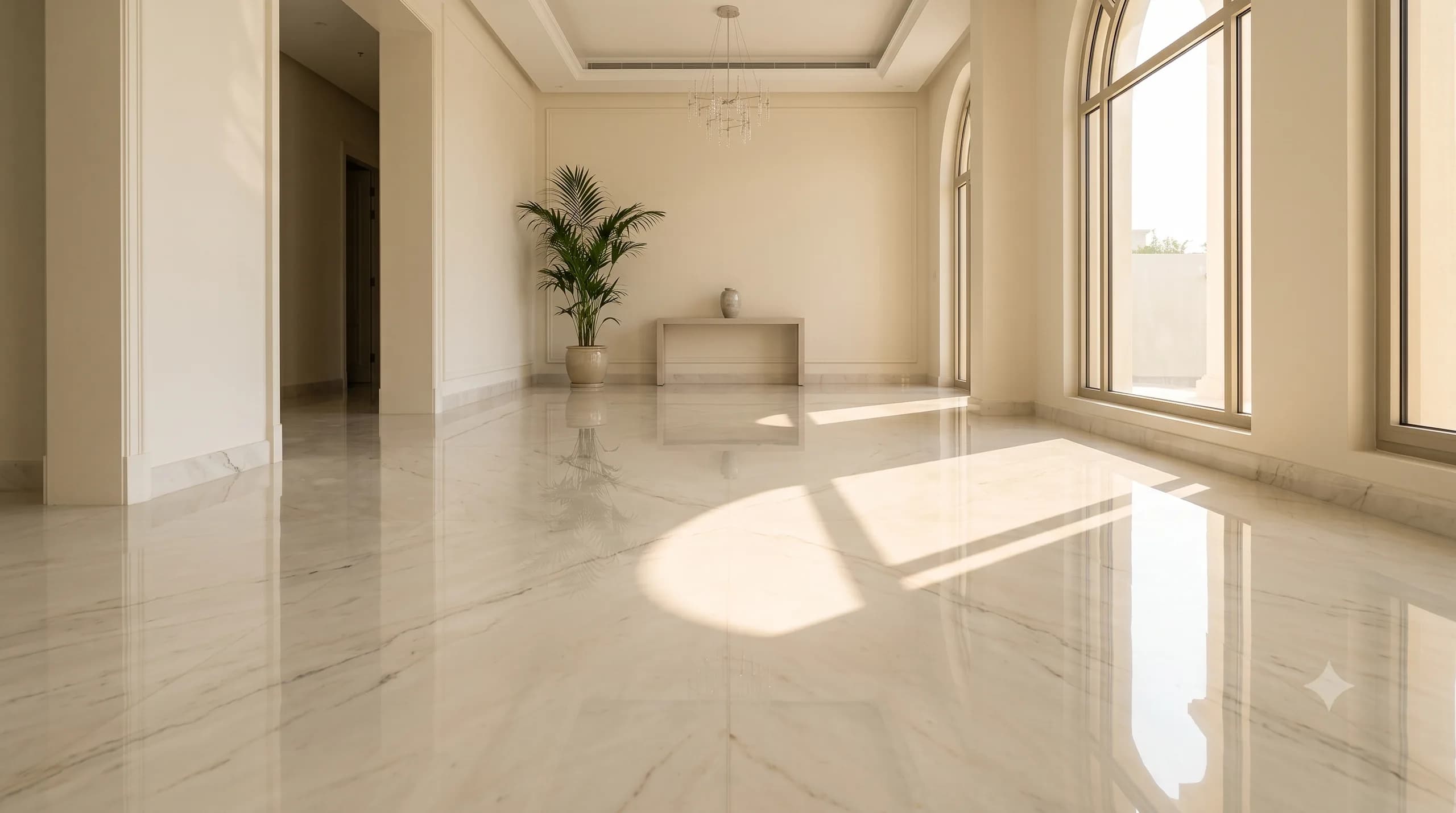
Marble is a favourite in Qatar villas, from entrance halls and majlis floors to staircases, but daily life here is hard on it. Fine desert sand carried in on shoes acts like sandpaper and wears the polish off walkways, while lemon, vinegar and many household cleaners leave dull etch marks because marble reacts with acids. Our marble polishing service in Doha restores the surface rather than covering it up: we grind away scratches and uneven joints with graded diamond pads, polish to the finish you choose, then seal the stone so it is easier to keep clean. We work in villas and homes across Doha, Lusail, Al Rayyan and the rest of Qatar.
Grinding & Scratch Removal
Restoration starts with an assessment of the floor: the type of marble, the depth of scratches and etching, any height difference between slabs, and whether old wax or coatings need stripping first. We then grind the surface with a sequence of diamond pads, starting coarse enough to remove the damage and moving through finer grits until the scratch pattern disappears. Grinding is done wet, which keeps dust down and lets us collect the slurry as we go. Where neighbouring slabs sit at slightly different heights, careful grinding levels the joints so the floor reads as one continuous surface again. Skirting, walls and furniture are protected before work begins.
Polishing & Sealing
After grinding, finer polishing pads bring the marble up to the finish you prefer, from a soft satin look to a high, mirror-like gloss. A polished finish reflects light beautifully but shows etch marks more readily, while a honed, satin finish hides everyday wear better, so we help you choose what suits each room. Once the stone is dry, we apply a penetrating sealer that slows the absorption of water, oil and coffee, giving you more time to wipe up spills before they stain. Sealing does not stop acids from etching marble, so we also leave you simple aftercare advice, including which cleaners to avoid.
Safety, guarantee and cost
Safe for your home and your stone
Marble is sensitive to acids and harsh chemicals, so we use stone-safe products and test them on a small area before treating the whole floor. Wet grinding keeps airborne dust low, and we protect walls, skirting, wooden doors and nearby furniture from splashes. We ventilate the room while sealer is applied and recommend keeping children and pets off the floor until it is dry. Our trained team takes care not to over-grind thin or delicate slabs, and we tell you in advance if a slab is cracked or too damaged to restore fully.
Our quality guarantee
We stand behind our marble work with a quality guarantee. If the finish is uneven or falls short of what we agreed, let us know and we will come back to correct it in line with our guarantee terms. Marble keeps wearing with daily use, so new scratches or etch marks from sand, furniture or spills after handover are dealt with by periodic maintenance polishing, which we are happy to advise on.
What affects the cost of marble polishing
Marble polishing is usually priced per square metre, with the final figure depending on the job. The main factors are the total area, the type and condition of the marble, how deep the scratches and etching go, whether old wax or coatings must be removed, the height difference between slabs, any stairs or skirting, and whether sealing is included. Prices start from 30 QAR per square metre, and small jobs may carry a minimum charge of 400 QAR. Send photos or book a free consultation for an accurate quote.
When your marble needs attention
- Dull walkways in entrances, corridors and around the majlis
- Fine scratches that show when light hits the floor
- Dull rings or patches from lemon, vinegar or juice
- Uneven joints you can feel between slabs
- Stains that soak in and darken the stone
- Floors that look dirty even straight after mopping
- Before moving in, selling or hosting a big occasion
Our marble restoration process
Inspection & agreement
We identify the marble type and damage, check for old wax or coatings, and agree the finish and areas with you. Where useful, we polish a small test patch so you can see the result first.
Protection & preparation
Furniture is moved or covered, skirting and walls are protected, and the floor is cleaned thoroughly so loose grit cannot scratch the surface during grinding.
Diamond grinding
Graded diamond pads remove scratches, etch marks and uneven joints step by step. Water keeps the dust down, and the slurry is collected as we work so it does not spread.
Polishing to your finish
Progressively finer pads, with polishing compounds where they suit the stone, build up the chosen finish, from satin to high gloss, evenly across the whole area.
Sealing & handover
Once the floor is dry, a penetrating sealer is applied. We walk the floor with you, explain how long to wait before normal use and share tips on cleaners, mats and spills.
Frequently asked questions
How much does marble polishing cost in Doha?
Marble work in Qatar is usually priced per square metre, so the cost depends on the area and the condition of the stone. Our prices start from 30 QAR per square metre, with deeper grinding, stairs and sealing priced according to the work needed. Send us photos on WhatsApp or book a free consultation, and we will confirm the price with you before any work starts.
What is the difference between diamond polishing and crystallisation?
Diamond grinding and polishing physically removes a very thin layer of the surface with graded abrasive pads, taking out scratches and etching and levelling the joints. Crystallisation is a different, chemical-mechanical treatment that boosts the gloss of calcium-based stone such as marble, but it does not remove deep damage and does not suit every marble or finish. After inspecting your floor, we recommend the method that fits its condition.
How long does marble polishing take, and is it messy?
Timing depends on the area and how much grinding is needed. Because grinding is done wet, there is much less airborne dust than with dry sanding. We collect the slurry as we go, protect walls and furniture, and leave the area clean when we finish.
Can you remove etch marks from lemon or vinegar?
In most cases, yes. Etch marks are spots where acid has dissolved the polished surface. Light etching can often be polished out, while deeper marks need diamond grinding before repolishing. To avoid new marks, wipe up acidic spills quickly and clean with a pH-neutral stone cleaner rather than vinegar or general bathroom products.
How often should marble floors be polished and sealed?
There is no fixed schedule; it depends on foot traffic, how much sand comes in and how the floor is cleaned, and busy villa entrances usually show wear first. For sealing, try a simple test: place a few drops of water on the stone. If it darkens within a few minutes, the marble is absorbing water and is due for resealing. We can suggest a maintenance plan after inspection.
Didn't find your answer?
Ask us on WhatsAppNeed our services?
Get in touch today for a free consultation and a quote tailored to your needs.
Send an Email